Etiquette for Every Social Interaction
Learn essential Malaysia culture and etiquette tips. Master local greetings, dining customs, and dress codes to travel with respect and ease.
As someone who has spent the last ten years showing friends from all over the world the hidden corners of my beautiful home, I’ve realized that while our landmarks are stunning, it’s the heartbeat of our people—our adab (etiquette)—that truly stays with you.
Greetings
To truly understand our greetings, you first have to understand the soul of our people. As a guide who has walked these streets for a decade, I can tell you that a Malaysian “hello” isn’t just a word—it is a reflection of Unity in Diversity. Our society is a beautiful weave of Malay, Chinese, Indian, and indigenous threads, all held together by a shared heartbeat.
The Heartbeat of Our Greeting: Core Values
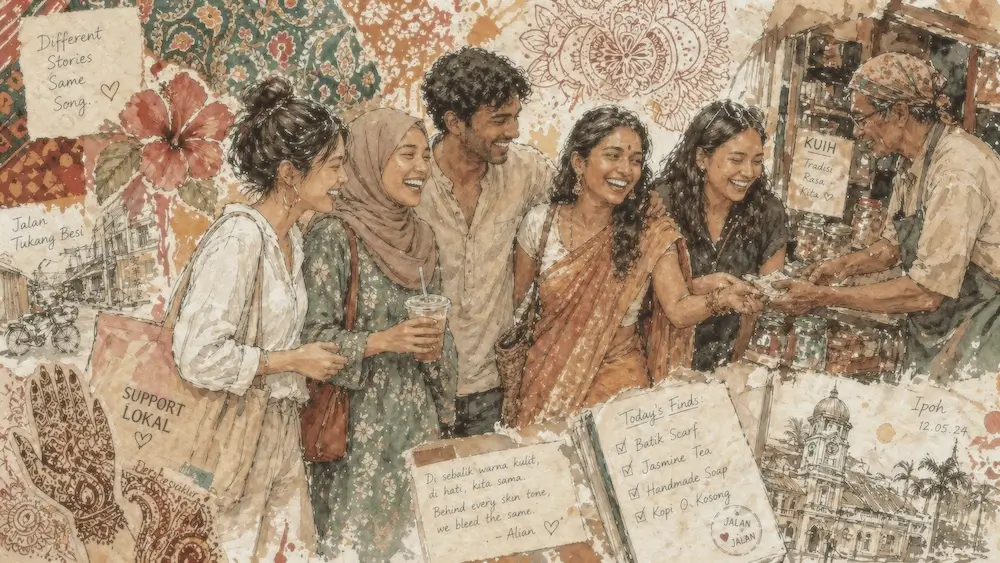
When we greet you, we aren’t just being polite; we are practicing values that have been passed down for generations. Understanding these will help you see the “why” behind our smiles:
- Budi: This is my favorite word. It’s a multifaceted concept that embodies kindness, respect, and deep empathy. When we greet you, we are offering our budi.
- Gentleness & Harmony: We have a strong inclination toward composed behavior. You’ll notice we rarely shout or rush a greeting; we prefer a calm, harmonious atmosphere.
- Respect & Filial Piety: Respect is our foundation, particularly for elders and those in authority. This is why we place such emphasis on family ties—you’ll often see us bow slightly when greeting an older person to show humility.
- Courtesy & Modesty: Politeness is fundamental to our social manners. Being modest and reserved is seen as a sign of great character, so our greetings are often quiet and humble rather than loud or boisterous.
Greetings in a Multicultural Land
Because Diversity is our celebrated hallmark, the way we say hello can change depending on who you are meeting. However, the spirit remains the same.
- The “Salam” (The Heart Connection): As I mentioned, the traditional Malay greeting is a soft touch of palms followed by bringing your hand to your heart. It’s the physical manifestation of Budi.
- The Family Greeting: Because of our deep sense of Filial Piety, we treat everyone like kin. Don’t be surprised if a stranger calls you “Brother” (Abang) or “Auntie.” It’s our way of showing you that you aren’t a stranger; you are part of our extended family.
- The Language of Food: Our most famous greeting, “Sudah makan?” (Have you eaten?), is the ultimate act of kindness. It’s how we show we care about your well-being before anything else.
A Tip from Your Guide
When you greet a Malaysian, remember that Modesty and Gentleness go a long way. A soft nod, a gentle smile, and a quiet “Apa khabar?” (How are you?) tells us that you respect our culture. You don’t need to be perfect; you just need to be sincere.
Now that we’ve shared a greeting, let’s get you out into the streets! Exploring Malaysia is a sensory adventure, but to move like a local, there are a few “unwritten rules” of the road I’ve picked up over my ten years of guiding.
Whether you’re hunting for a bargain or waiting for your Nasi Lemak, here is how to navigate our daily life with Budi (kindness) and grace.
Shopping & The Art of the Bargain
In our modern malls, prices are fixed, but in our vibrant Pasar Malam (night markets) or local bazaars, bargaining is a social dance.
- The Humble Approach: Start with a smile. If you find something you love, ask for a “best price.” Avoid being aggressive; remember our value of Gentleness. A polite, “Can give discount, Uncle?” often works better than a demanding tone.
- Know When to Stop: Bargaining is for small local vendors, not high-end boutiques or convenience stores. If the price reaches a point you’re happy with, it’s polite to close the deal. We call it a “win-win.”
- The Right Hand: When paying or receiving your change, always use your right hand. It’s a small gesture of Courtesy that locals will quietly notice and appreciate.
Eating Venues: From “Mamak” to Fine Dining
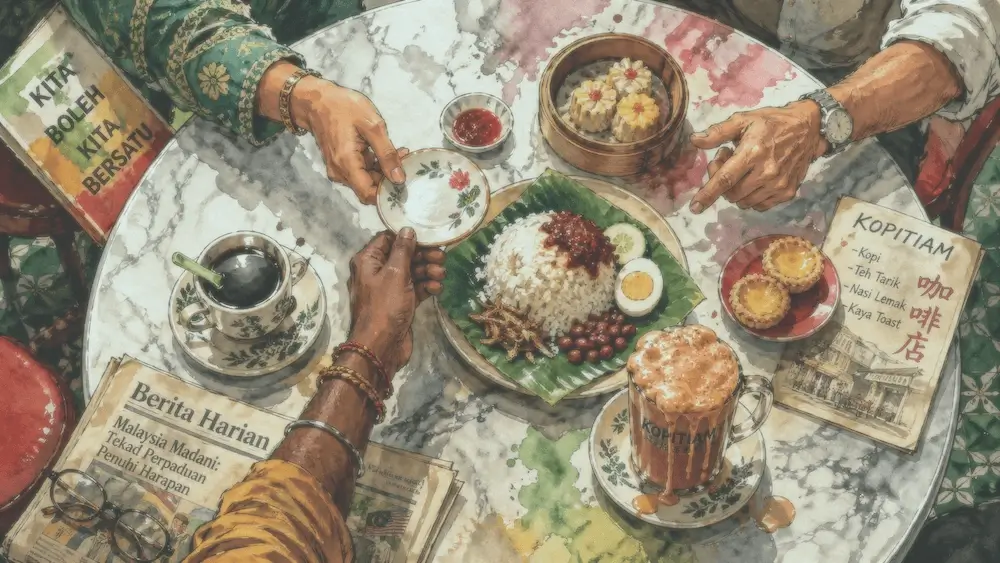
Food is our national obsession. Whether you’re at a roadside stall or a fancy restaurant, keep these in mind:
- Finding a Seat: At busy “Mamak” stalls (24-hour eateries) or hawker centres, it’s common to share tables with strangers. Just a quick nod or asking “Is this seat taken?” is all the permission you need.
- The Table Signal: You might see a packet of tissues or an umbrella sitting alone on a table. This is the “chope” system—a local way of reserving a spot while they go order food.
- Respecting Dietary Laws: We are a diverse bunch. If you’re with Malay friends, ensure the venue is Halal (no pork or alcohol). For Hindu or certain Buddhist friends, many may not eat beef. We always check with our guests first—it’s how we show Respect.
Public Transportation: The Commuter’s Code
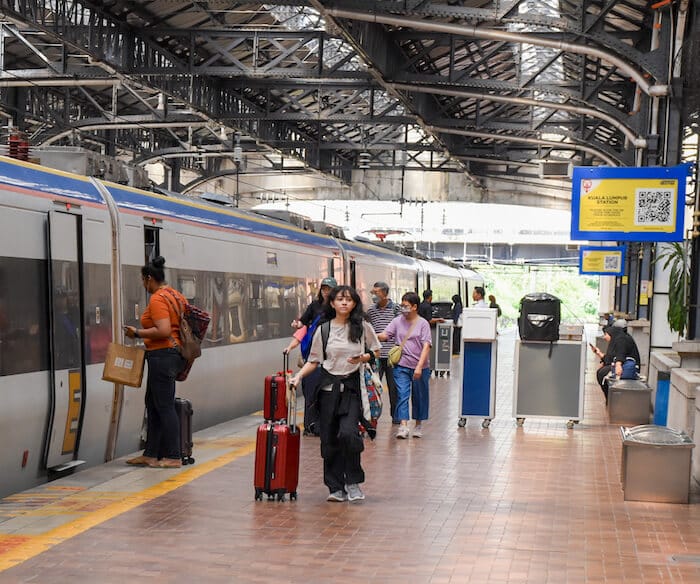
Our trains (LRT, MRT) and buses are the best way to beat the KL traffic, but they are also places where our Core Values are most visible.
- Giving Up Your Seat: You will often see young Malaysians immediately stand up for elders, pregnant women, or people with disabilities. This stems from our deep sense of Filial Piety. If you see someone who needs a seat more than you, offering yours is a beautiful way to show you understand our culture.
- Keep it Quiet: Generally, Malaysians are quite reserved on public transport. Keeping phone conversations low is considered a mark of a well-mannered traveler.
The “Queue” Culture
We are generally a patient people. Whether waiting for a bus or a famous plate of Char Kway Teow:
- Patiently Waiting: You’ll notice Malaysians queue quite orderly. Jumping the line is a big “no-no” and causes a “loss of face” for the person doing it.
- Personal Space: While we are friendly, we also value Modesty. Give the person in front of you a little bit of breathing room in the line.
A Tip from Your Guide
If you’re ever lost or confused at a train station, don’t hesitate to ask a local for help. Use that “Family” approach I told you about—”Excuse me, Sister, which platform for Bukit Bintang?”—and you’ll find people are incredibly eager to guide you.
Navigating the Atmosphere
In Malaysia, every place you visit—from a bustling street market to a silent mosque—has its own “gravity” and “atmosphere.” Dressing with respect is how you align your own orbit with the local world. The way you dress is your first “silent greeting.” It shows you’ve taken a moment to understand our values of Modesty and Respect before you’ve even said hello.
In Malaysia, every place you visit—from a bustling street market to a silent mosque—has its own “gravity” and “atmosphere.” Dressing with respect is how you align your own orbit with the local world.
- The Atmospheric Shift (The Shoes): Think of removing your shoes not as a chore, but as a decompression. By leaving your footwear at the threshold, you are shedding your “traveler’s armor.” You are signaling that you are ready to step into a more sensitive, grounded space where the connection between the person and the ground is direct and pure.
- The Protective Canopy (The Dress Code): Choosing modest clothing is like adjusting your brightness so you don’t overwhelm the space. In a sacred or traditional area, loud or revealing clothing can feel like a “harsh light” in a room meant for soft shadows. By covering up, you create a “protective canopy” of modesty that allows the local culture to remain undisturbed and comfortable in your presence.
- Harmonizing with the Void (The Empty Space): In our values of Gentleness and Modesty, we often find beauty in what isn’t shown or said. Dressing conservatively honors that “empty space.” It shows you understand that some things are meant to be private, sacred, and kept within the community.
- The Weightless Exchange (The Right Hand): When you pass an item with your right hand or use your thumb to point, you are moving through the space with minimum friction. These small gestures are like “aerodynamics” for social interaction—they allow you to glide through Malaysian society without accidentally bumping into someone’s sensibilities.
Let’s talk about the “gold standard” of a perfect interaction here. In Malaysia, communication is less about the exchange of information and more about the exchange of energy.If you think of our culture as a shared “space,” then perfect communication is the art of moving through that space without creating ripples. It is a dance of Gentleness and Budi.
The Art of “High-Context” Connection
We are a “high-context” society. This means that how you say something is often more important than the words themselves.
- The Soft Landing: Avoid being too blunt or direct. If you need to say “no” or bring up a problem, wrap it in layers of politeness. Instead of “This is wrong,” try “I am a little confused, perhaps we could look at this together?” This preserves Harmony and ensures no one “loses face.”
- Reading the Silence: Silence in a Malaysian conversation isn’t awkward; it’s often a sign of Respect or reflection. You don’t need to fill every gap with noise. Sometimes, a shared quiet moment over a cup of Teh Tarik is the most “perfect” communication you can have.
The “Unity” Signal: Body Language
Since we value Modesty, our body language is often understated:
- The Humble Bow: When passing between two people who are talking, or walking in front of an elder, we do a “half-bow”—a slight dip of the head and shoulders with one hand extended downward. It’s a physical way of saying, “Excuse me, I don’t mean to intrude on your space.”
- Eye Contact: While a friendly gaze is good, prolonged, intense eye contact can sometimes be seen as aggressive. A gentle, intermittent gaze paired with a smile is the perfect balance of Courtesy.
The Final “Key”: The Right Hand and Heart
To leave a lasting impression of a truly “perfect” guest:
- The Double-Handed Receipt: When someone gives you a business card, a gift, or even your change at a shop, receive it with both hands. It signals that you value the person and the exchange.
- The “Heart” Close: As you leave, a small nod with your right hand over your heart (the Salam spirit) tells us that our interaction wasn’t just a transaction—it was a connection.
While Malaysians are incredibly forgiving and patient with guests, crossing these lines can “snap the thread” of harmony, often without you even realizing it.
To keep your journey smooth, here are the things to hold in your heart as “non-negotiables.”
The Head and the Feet: The Vertical Taboo
In our cultural space, the body is seen as a hierarchy of respect.
- The Sacred Head: Never touch anyone’s head—not even a playful pat for a child. The head is considered the most sacred part of the body, the seat of the soul. Touching it is a deep intrusion of personal space.
- The “Dirty” Feet: Conversely, feet are the lowest and “unclean” part of the body. Never point the soles of your feet at people, religious icons, or even food. If you accidentally kick someone’s foot, a quick and sincere “Maaf” (Sorry) is essential to mend the thread.
The “Loss of Face”: The Public Storm
Perhaps the biggest taboo in Malaysia is public confrontation.
- Anger is a Breach: Shouting, losing your temper, or aggressively demanding your rights in public causes everyone involved to “lose face.” To us, someone who cannot control their emotions is seen as lacking Budi (character).
- The Solution: If a mistake happens, handle it with a “cool heart” (hati tenang). A quiet, private conversation will solve a problem ten times faster than a public scene.
The Left Hand: The Unspoken Insult
I’ve mentioned this before, but it bears repeating because it’s so easy to forget.
- The Taboo: Using your left hand to eat, give a gift, or shake hands is considered “unclean.”
- The Nuance: Even if you are just handing a shopkeeper some cash, using your left hand can feel like a subtle rejection of the person. Always lead with your right hand.
Sensitive Subjects: The Pillars of Society
Malaysia is a beautiful balance of different faiths and traditions. To keep that balance, there are “quiet zones” in conversation:
- Religion and Royalty: These are the two most respected pillars of our society. Making jokes or being overly critical about religion or the Monarchy is not just impolite—it can be a legal matter. It’s best to observe and appreciate these aspects rather than debate them.
- Dog and Pig Imagery: For our Muslim community, dogs and pigs are considered “unclean.” Avoid giving gifts with these images or bringing a pet dog into predominantly Malay dining spaces.
Public Displays of Affection (PDA)
While we are a romantic people at heart, we are also Modest.
- The Boundary: Intense kissing or hugging in public is frowned upon. Holding hands is generally okay in modern cities, but in more traditional or rural areas, even that can feel “loud.” Keeping your affection private is seen as a mark of respect for the space others are sharing with you.
Frequently Asked Questions
Is Malaysia safe for tourists?
Yes, Malaysia is considered one of the safest destinations in Southeast Asia. Major cities and tourist areas are well-policed, infrastructure is reliable, and locals are friendly and helpful.
What is Malaysia best known for?
Malaysia is best known for its cultural diversity, world-famous street food, tropical islands, rainforests, and a blend of modern cities with historical heritage.
Is Malaysia expensive to visit?
No. Malaysia is very affordable compared to many travel destinations. Food, transportation, and accommodation offer excellent value for both budget and luxury travelers.
What is the best time to visit Malaysia?
Malaysia can be visited year-round. The drier months are ideal for outdoor activities, while off-peak seasons offer fewer crowds and lower prices.